
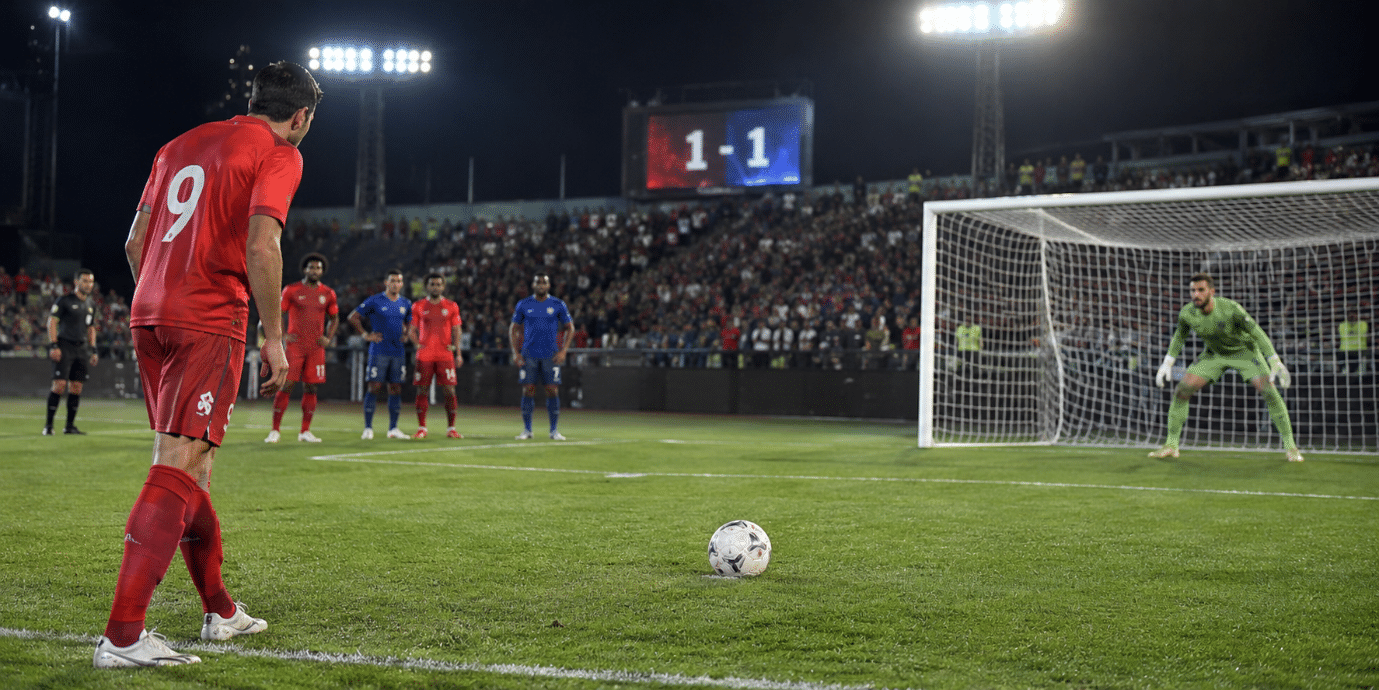
A Cup Shootout Changes the Football Betting Record
At Anfield on 28 October 2026, Chelsea and Liverpool each scored from the penalty spot before Liverpool won a much longer contest from the same mark. The match finished 1–1; the shootout finished 6–5. Those are two separate records, with different consequences for goal betting. Football appears beside online betting games on the same menus, but the displayed winner is not always the score used to settle a goals market. With league meetings scheduled for 5 December and 1 May, that distinction matters before the next figures are compared.
Two match penalties, then a separate shootout
Morgan Rogers put Chelsea ahead with a penalty in the 40th minute. Cody Gakpo equalised from another spot kick three minutes later. Both goals belong to the match score.
Under IFAB’s Law 10, a shootout takes place after the match has ended. That matters when a match report names a winner without changing its drawn score.
The shootout came afterwards. Joe Gomez scored Liverpool’s sixth successful attempt; Wesley Fofana then missed Chelsea’s final kick. Liverpool advanced, but the official match score remained 1–1. The 6–5 shootout tally should never be added to the two match goals. Even the phrase “penalty goal” needs context here. A spot kick during normal play counts. A successful kick in the deciding series does not count towards match totals.
Liverpool recorded ten shots during the match; Chelsea attempted eleven. Each side managed four on target. Both goalkeepers made three saves. Penalty conversions also account for both recorded goals, rather than successful finishes from open play.
For a standard 90-minute match, this game finished under 2.5 goals. Both Teams to Score, usually shortened to BTTS, was satisfied. A Liverpool win in a qualification market is another matter: that market can include the shootout, depending on its terms.
A record worth reading from the left
The last five meetings provide a useful exercise in separating the score from the result. The cup tie belongs in the sample, but its shootout does not alter the goals column.
| Date | Venue | Match score | Total goals | BTTS |
| 28 Oct 2026 | Anfield | Liverpool 1–1 Chelsea | 2 | Yes |
| 9 May 2026 | Anfield | Liverpool 1–1 Chelsea | 2 | Yes |
| 4 Oct 2025 | Stamford Bridge | Chelsea 2–1 Liverpool | 3 | Yes |
| 4 May 2025 | Stamford Bridge | Chelsea 3–1 Liverpool | 4 | Yes |
| 20 Oct 2024 | Anfield | Liverpool 2–1 Chelsea | 3 | Yes |
Both teams scored in all five games. Three finished above 2.5 goals. Those figures describe a small head-to-head sample, not an expected score for December. The two most recent meetings at Anfield, for example, ended 1–1. Chelsea’s two appearances at home in the table produced five Chelsea goals across the pair, with Liverpool scoring once in each.
December changes the ground beneath the numbers
The next league game is scheduled for 5 December 2026 at Stamford Bridge. The return fixture is listed for 1 May 2027 at Anfield. Home and away splits need to follow the venue rather than the order in which the clubs are named in a headline.
Chelsea’s recent home wins in this pairing are relevant. They are not the same as Chelsea’s overall home scoring record. A proper comparison would place current home league matches beside Liverpool’s away league results. Cup rotation also matters: the October match involved different selections from a league fixture. One drawn cup match cannot stand in for a team’s usual attacking output.
What each market actually measures
The same football result can settle several markets in different ways:
- Three-way result (1X2) — Liverpool and Chelsea finished 1–1 after 90 minutes plus stoppage time. The draw is the winning selection.
- Total Goals — Rogers and Gakpo scored once each. Two goals mean Under 2.5 wins, regardless of the shootout.
- Both Teams to Score (BTTS) — Both sides scored during normal play, so the Yes selection wins.
- To Qualify — Liverpool advanced after winning the shootout 6–5, even though the match itself ended level.
Match-specific terms take priority, particularly when extra time is possible. Setting a spending limit before the match helps keep betting within a planned budget.
The lesson hidden in the 6–5
Liverpool won the cup tie without winning the 90-minute match. That sounds contradictory only when the two results are collapsed into one. The upcoming league fixtures will be decided by league scoring rules, without a shootout to settle a draw. For goal research, the cleanest starting point is still the match score, followed by the venue and competition. Everything else belongs in a separate column.